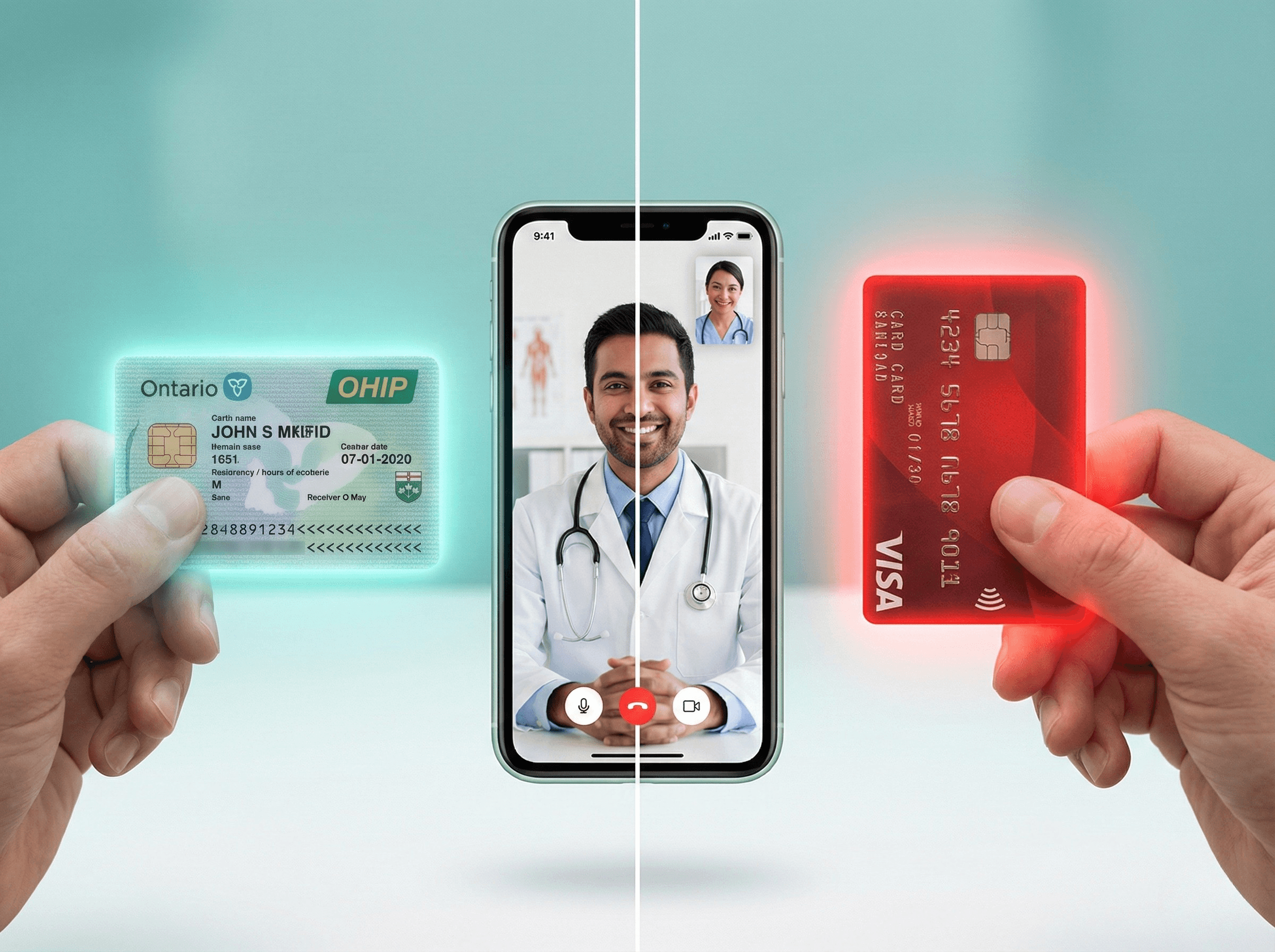
Introduction: The Importance and Chaos of Canadian Walk-In Clinics
Walk-in clinics are a lifeline in Canada’s strained healthcare system – especially for newcomers and the millions without a family doctor. These clinics allow patients to see a doctor without an appointment (“walk in”), offering crucial access for urgent but non-emergency needs. However, relying on walk-in clinics can be a frustrating gamble. Hours and wait times are often unpredictable, leading to chaotic experiences. On forums like Reddit, users have shared stories of checking an online map that promises a “20 minute wait” only to arrive and find a packed clinic with a two-hour wait[1]. Others report even more fundamental confusion – some clinics that are listed as “open” turn out to have already closed for the day[2]. This uncertainty around wait times and whether a clinic is even accepting patients has become a common source of anxiety and complaint for patients navigating the system.
Why is this happening? In Canada, there is no single centralized system for walk-in clinic information. Each clinic manages its own hours and queue, and many do not consistently update public data. As a result, patients often swap tips online, trying to figure out which clinic might see them sooner or at all. One Reddit user’s frustration sums it up: “Wait times aren’t accurate. They change constantly depending on what comes in.”[3] The combination of changing clinic hours, first-come-first-served queues, and unreliable data creates a perfect storm of confusion.
Against this chaotic backdrop, third-party tools have emerged to help patients find open clinics and estimate wait times. The most notable is Medimap, a popular wait-time aggregator for walk-in clinics. Medimap has become widely used in some provinces, and the feedback about it reveals both its promise and its pitfalls. By examining what users are saying about Medimap – the praises and the criticisms – we can better understand the walk-in clinic dilemma and see what solutions might actually help.
Medimap’s Bright Spots: Anxiety Relief, Praise from Parents, and Online Convenience
Despite the challenges, Medimap clearly addresses a real need, and many Canadians have found it helpful. The platform’s core feature is showing real-time wait time information for nearby walk-in clinics on a map. Users often highlight how this reduces the stress of seeking care. As one user explained, “Medimap is a great tool for people like me whose doctor retired. Being able to determine wait times for nearby clinics is very helpful and relieves anxiety.”[4] For patients without a family doctor (a common situation for newcomers and others), just knowing which clinic might see them sooner provides peace of mind. Instead of driving around blindly or bracing for an unknown wait, they can check Medimap first and feel a bit more in control.
Convenience is another big plus. Medimap spares patients from having to call multiple clinics or physically visit each one to compare wait times. “The online check in is amazing! I wish more places used it,” one Victoria user raved[5]. Some clinics on Medimap allow you to “check in” online to hold your place in the queue, which users found far more convenient than waiting in a reception area. Patients also noted that having all clinics visible in one place helps “balance the load” across the city – if one clinic is showing a very short wait, not everyone ends up flocking there because others will see it and spread out to different clinics[6]. In theory, this means clinics with longer waits might get some relief as patients redistribute themselves, and overall wait times even out.
Perhaps the most heartfelt praise comes from parents. Taking care of sick children is stressful enough without the added nightmare of driving from clinic to clinic only to find long lines or closed doors. One parent shared their experience: “There is nothing worse than driving from clinic to clinic with two sick kids. Medimap is a life saver!”[7]. By checking wait times in advance, they saved precious time and avoided dragging their ill children to multiple locations needlessly. Stories like this underscore how, at its best, Medimap can make a real difference in people’s day-to-day lives by saving time and reducing uncertainty.
To its credit, Medimap has also been expanding features in response to user needs. Some users noticed a new prompt asking “Are you looking for a family doctor?” – clicking it provides a list of clinics or offices accepting new patients[8]. For newcomers who often don’t have a family physician, this is a welcome addition alongside the walk-in wait info. All these bright spots – real-time data, online check-ins, and feature add-ons – show why Medimap has become popular. It’s filling an information gap and helping many patients feel less anxious and more prepared when seeking walk-in care.
Systemic Issues with Medimap: Data Gaps, $5 Controversies, and Trust Concerns
However, Medimap’s reputation isn’t all positive – in fact, it has faced significant criticism stemming from systemic issues in how it gathers data and operates. A major complaint is inaccurate or unreliable information. While Medimap can be very helpful when clinics actively update their wait times, users in multiple cities have observed big discrepancies between what the app shows and what they encounter on-site. “Twice in the last week, I’ve waited three hours at the same clinic that had the shortest wait times in the city,” a Saskatoon user reported[1]. Another frustrated user wrote, “I use it every time I need to go to a clinic. However, I find it rarely accurate.”[9]. These experiences suggest that in practice the posted estimates can lag far behind reality. If a sudden surge of patients arrives or a doctor is slower than expected, the wait time can balloon – but patients checking Medimap might not see that change right away.
Medimap’s usefulness depends on clinics keeping their information up-to-date, and many simply don’t. In fact, some clinics have stopped reporting to Medimap altogether. As one person noted, “Medimap used to provide this service, but very few clinics are keeping their listings current these days, making it largely ineffective now.”[10] Over time, if clinics neglect to update their wait times or hours, the data becomes stale and misleading. Unfortunately, there’s no guarantee that a clinic’s listing on Medimap is accurate – it might show “OPEN” with a 15-minute wait when in reality the clinic stopped accepting new patients an hour ago. This lack of reliable participation by clinics undermines the very problem Medimap is trying to solve. Users end up having to gamble on the information or double-check by phone anyway.
Beyond accuracy issues, controversies over monetization and ethics have also troubled Medimap. One flashpoint was when Medimap introduced a $5 fee for patients to reserve a spot in line through the platform. The idea was that, for $5, you could secure your place in the queue without physically waiting at the clinic. The backlash was immediate. “Remember when Medimap charged $5 to hold your spot and people on this sub screamed bloody murder?” one Reddit user recalled[11]. Critics argued that this was a slippery slope towards pay-for-access in a public healthcare system. Charging even a small fee for faster service felt wrong to many, given Canada’s principles of universal healthcare. “$5 may not seem like a lot but it is still paying extra to get better service from the public system and for some that $5 can actually be a barrier,” another user commented[12]. The uproar was loud enough that B.C.’s provincial government reviewed whether Medimap’s fee violated the law (specifically, the Medicare Protection Act’s ban on extra-billing)[11]. Medimap eventually reported that the program had support and continued in some form, but the damage to trust was done. For some Canadians, Medimap’s $5 experiment felt like a worrying step toward privatization, and it left a lingering bad taste.
Then there’s the Victoria clinic incident, which raised questions about Medimap’s neutrality. Users in Victoria noticed something strange: a private clinic called Perpetual Health kept appearing at the top of Medimap’s search results for the area[13]. This clinic did not provide wait time data (since it wasn’t a normal walk-in) and charged around $500 per visit as a concierge service – in other words, it catered to people who could pay out-of-pocket and wasn’t part of the publicly-funded system[14]. Despite this, Medimap prominently listed Perpetual Health alongside ordinary walk-in clinics. Many users were outraged. It appeared to them that Medimap was giving a paid, membership-based clinic free advertising at best, or preferential placement at worst. “It’s definitely a paid slot to be at the top. It’s essentially a ‘featured’ post,” one user argued, suspecting that Perpetual Health paid Medimap for the exposure[15]. “I wish Medimap wouldn’t provide places like these with essentially free marketing by lumping them in with other walk-ins… It feels purposefully deceptive,” wrote another frustrated local[16]. The trustworthiness of Medimap’s listings came under fire – was the platform prioritizing profit over patients? Additional digging by users uncovered that one of Medimap’s major investors had ties to media companies, fueling speculation about conflicts of interest[17]. While Medimap defended itself, saying it was filling a gap left by the public system, the incident highlighted a core issue: when vital healthcare information is provided by a private company, transparency and neutrality become a concern.
In summary, Medimap, despite helping many, has been hampered by systemic problems. Data accuracy can fall apart if clinics don’t actively participate. Attempts to monetize (like the $5 reservation fee) triggered public backlash about fairness. And perceived ethical lapses (like featuring a paid clinic) damaged user confidence. These issues show the limits of relying on a single app to fix a broader healthcare navigation problem. They also set the stage for thinking about how a solution could be better: more reliable data, more transparent practices, and keeping patient interests first.
Why Is Accurate Walk-In Data So Hard?
To truly understand the walk-in clinic conundrum, we have to look at why getting accurate, up-to-date information is such a challenge in the first place. It turns out the chaos is built into the system. Walk-in clinics operate on a first-come-first-served basis, often with a daily cap on how many patients they can see. If a clinic is supposed to close at 5 PM, they might actually stop accepting new patients much earlier once they’ve hit capacity. In fact, in British Columbia about “half of all the clinics… are closing early” on a regular basis as they reach the maximum number of patients or the billing limit for the day. This means a clinic’s posted hours don’t always match reality – a clinic might be “open” in theory, but effectively closed to new walk-ins by mid-afternoon. Patients arriving late in the day could be turned away even though the sign on the door still says open. That dynamic makes any kind of real-time status tracking difficult: the definition of “open” can change hour by hour.
Furthermore, wait times are inherently volatile. All it takes is a few complex cases or a doctor needing to step away for the estimates to become meaningless. One year, B.C. had the longest average walk-in wait in Canada at 58 minutes, which later rose to 70-75 minutes by 2022. These averages hide spikes where clinics see rushes of patients (for example, Monday mornings are notoriously busy as people seek care after the weekend). During flu season or other peaks, walk-in clinics may get overwhelmed, causing wait times to soar and even forcing early closure when staff can’t take more people. This variability is hard for any app to capture in real time.
Another fundamental issue is the lack of a centralized, automatic data source. Medimap and similar tools rely heavily on clinic staff to manually update their wait times and status. But clinic receptionists and managers are already juggling ringing phones, patients at the front desk, and paperwork. Updating an app every 30 minutes is not always their top priority. Indeed, many clinics simply forget or choose not to post updates. “Clinic participation is inconsistent,” one analysis noted – some clinics update frequently, while others provide stale data or stop updating entirely, making the search results less reliable[18]. In essence, the system is asking busy humans to push data to a platform; when those humans are too busy or disengaged, the data dies on the vine.
The fragmentation of healthcare in Canada adds another layer of difficulty. Each province has its own systems (consider how Quebec uses Bonjour-santé for bookings, or B.C. has its Health Connect registry) and thousands of independent clinics operate with little coordination. There’s “no centralized, verified source” for walk-in clinic information across the country[19]. That means any app or service trying to aggregate data has to do a lot of legwork – calling clinics, scraping websites, relying on user reports – and still can’t guarantee completeness. The moment information is collected, it can go out of date. It’s a bit like trying to hit a moving target.
All these factors explain why Medimap’s data accuracy issues aren’t entirely surprising. The walk-in clinic environment is dynamic and often understaffed, and it lacks the kind of real-time IT integration that, say, ride-sharing apps have with drivers. Until clinics have an incentive or mandate to keep data updated (or technology like automated wait time trackers becomes standard), any solution will face this hurdle. It’s not impossible to improve – but it requires a more resilient approach to gathering and verifying information.
Practical Tips for Using Medimap (or Any Wait-Time Tool)
Given the challenges above, completely relying on any single source of clinic information can lead to frustration. However, there are ways to make the best of what’s available. Here are some practical tips to use Medimap (and similar tools) more effectively and minimize headaches:
- Use it as a Relative Guide, Not Gospel: Treat the posted wait times as a rough comparison between clinics, not an exact promise. One experienced user noted that while the estimates can be off, “the comparative durations between them do provide some insight.” In other words, if one clinic shows 15 min and another shows 90 min, you can be fairly sure the first is shorter – just don’t bank on it only being 15 minutes[20]. Use the info to pick a clinic that’s likely quicker, but still be prepared for variation.
- Refresh Frequently (Timing Matters): Medimap data is most useful when it’s recent. Some users find it “very accurate, especially if you’re checking it on the hour.”[21] This suggests that looking at the top of the hour (when some clinics may update) could give a better snapshot. If you checked a clinic’s wait time early in the morning and you’re planning to go in the afternoon, check again closer to the time – the situation might have changed completely. Frequent refreshes can help you catch sudden changes in wait times before you head out.
- Call to Confirm Key Details: If Medimap shows a clinic status or wait time that is critical to your decision, it’s a good idea to call the clinic directly to double-check. A quick phone call can verify if they are still accepting patients and what the current wait roughly is. Clinics will often put an outgoing message when they’ve closed early or reached capacity. This can save you from a wasted trip. Use Medimap to narrow down options, then call the front-runner to confirm it’s a sure bet.
- Avoid Peak Hours When Possible: Certain times are almost always busier at walk-in clinics. For example, Monday mornings (after the weekend gap in primary care) or weekday lunch hours can see high demand. If your medical need allows some flexibility, try going at slightly off-peak times – mid-morning or mid-afternoon on a mid-week day often has shorter waits. Also, showing up well before closing time is important; many clinics stop taking new patients long before the official closing hour if they’re full. In short, timing your visit can be as important as choosing the location.
By following these tips, you can mitigate some of the unpredictability of walk-in clinics. Medimap and other tools are helpful, but they work best when you understand their limits and supplement them with a bit of your own planning. It’s all about using these services smartly to get a general sense of where to go, then staying agile as conditions change.
NaviCare’s Solution: Verifying Open Clinics Without the Hype
All the above insights from Medimap’s strengths and weaknesses point to one thing: the need for a more reliable, transparent way to find an open clinic. This is where a new platform called NaviCare comes in – not as a magic fix or hype-driven app, but as a thoughtful attempt to address the systemic gaps. NaviCare was designed with these exact challenges in mind, learning from what Medimap gets right and where it struggles.
The key difference in NaviCare’s approach is verification. Rather than relying solely on clinics to self-report their status, NaviCare emphasizes double-checking and cross-referencing information to ensure a clinic is truly open and seeing patients. The strategy is essentially to “out-execute with real-time verification, not self-reported data.”[22] What does this mean in practice? For one, NaviCare doesn’t just take a clinic’s word for it. If a clinic’s last update was two days ago, NaviCare will flag that and seek recent confirmation before assuring users that the clinic is available. It might do this by tapping into multiple data streams – for example, monitoring if the clinic’s phone lines are active, checking their official social media for announcements, or enabling community feedback from other users who visited that clinic today.
NaviCare also actively combines data from different sources to paint a more accurate picture. In regions like Nova Scotia, for instance, NaviCare plans to scrape official health system registries (like provincial lists of clinics and their known hours) and integrate that with real-time user updates[23]. If a government site shows a clinic’s standard hours, but users report the clinic closed early, NaviCare can reconcile that by updating the status and noting the discrepancy. This multi-source approach is meant to reduce the chance of incorrect info slipping through. It’s like having a second set of eyes on the data. In fact, NaviCare’s development was influenced by Reddit feedback calling for a “verification layer + crowd-sourced updates” to build trust[19]. The platform will indicate when a clinic was last verified open (for example, “Verified open 15 minutes ago”) so users know how fresh the information is – a simple but powerful detail that Medimap lacks.
Another focus for NaviCare is tackling the exact question patients keep asking: “Can I even get in?” Wait time is only useful if the clinic is taking patients. So NaviCare puts a spotlight on showing which clinics are currently accepting new walk-in patients, and it filters out those that aren’t. In other words, the first thing you’ll see is a list of clinics that are confirmed open right now and willing to see you. This addresses that primary pain point of users showing up to find the door effectively closed. It’s no use knowing a clinic has a 10-minute wait if they already locked the door at capacity – NaviCare aims to warn you about that ahead of time.
Crucially, NaviCare is approaching this as a community-driven solution rather than a top-down service. That means it encourages input from users (like reporting a closed clinic or updating a wait time) and plans to build partnerships, not paywalls. There is a conscious decision to avoid the pitfalls of monetization that angered Medimap users – for example, no $5 fee to hold a spot. NaviCare’s value proposition is in providing trustworthy data, not selling faster access. By aligning with patient interests (helping everyone find an open clinic) instead of clinic or investor interests, the platform seeks to build credibility. It is also transparent about sponsorships and listings – if anything is ever promoted, it should be clearly labeled to avoid the kind of confusion seen in the Perpetual Health incident.
It’s worth noting that NaviCare isn’t claiming to eliminate wait times or magically add more doctors to the system. The Canadian healthcare crunch is a big puzzle, and technology alone can’t solve provider shortages. But what NaviCare promises is a better way to navigate what we have: an easier method to know where to go, when to go, and what to expect. Features in the pipeline include things like an AI triage that can suggest if you need an ER or a clinic, and even online booking requests for clinics that support it. Yet, these will be built on the foundation of trustworthy clinic data. As one internal strategy note put it, the first step is to “lead with ‘accepting patients’ status” via real-time verification and community updates[24]. That’s the cornerstone of NaviCare’s solution.
In short, NaviCare is positioning itself as a next-generation Medimap that has learned from the latter’s missteps. By verifying clinic status, aggregating multiple data sources, and committing to an open, user-first model, it aims to remove the guesswork and anxiety from finding a walk-in clinic. For patients – especially newcomers unfamiliar with the system – this could mean no more driving around town in vain or relying on outdated info. Instead, you can open an app and trust that “open” means open, and a 20-minute wait means you’ll actually see a doctor soon.
Conclusion: Toward a Transparent Walk-In Ecosystem (and How You Can Navigate It)
Canada’s walk-in clinic saga – from long queues and early closures to apps like Medimap and new solutions like NaviCare – underscores a broader need for transparency in our healthcare system. Patients shouldn’t have to play detective or gamble with their health when seeking basic care. As we’ve seen, even well-intentioned tools can falter without up-to-date data and ethical practices. The ultimate fix will require cooperation: clinics regularly updating their status, platforms verifying information and prioritizing patients, and maybe authorities providing better data infrastructure. A more transparent walk-in ecosystem benefits everyone, reducing frustration and ensuring those who need care can actually find it.
For now, as individuals, the best we can do is stay informed and use the tools at our disposal wisely. Keep sharing your experiences – feedback on forums and social media has already driven improvements (and exposed problems) in services like Medimap. In fact, it’s patient voices that are pushing these platforms to be better. By advocating for your needs, you contribute to that transparency.
If you’re tired of showing up to shuttered clinics or hour-long waits, consider giving NaviCare a try as it rolls out. It’s built on the lessons learned from Medimap’s journey, with an aim to provide verified, real-time information on which clinics are actually open and ready to help. Think of it as having a knowledgeable local guide, steering you to the right place at the right time. No more guesswork – just the facts you need to make an informed decision.
Ultimately, whether you use Medimap, NaviCare, or a simple phone call to a clinic, the goal is the same: to get the care you need without unnecessary stress. Let’s move towards a system where finding a doctor is the easiest part of getting better. In the meantime, arm yourself with the best information available. With new tools emphasizing accuracy and community input, the days of wandering from clinic to clinic might just become a thing of the past.
Ready to find a clinic that’s actually open now? Give NaviCare a look and see real verified clinic statuses around you – so you can get the care you need with confidence.